
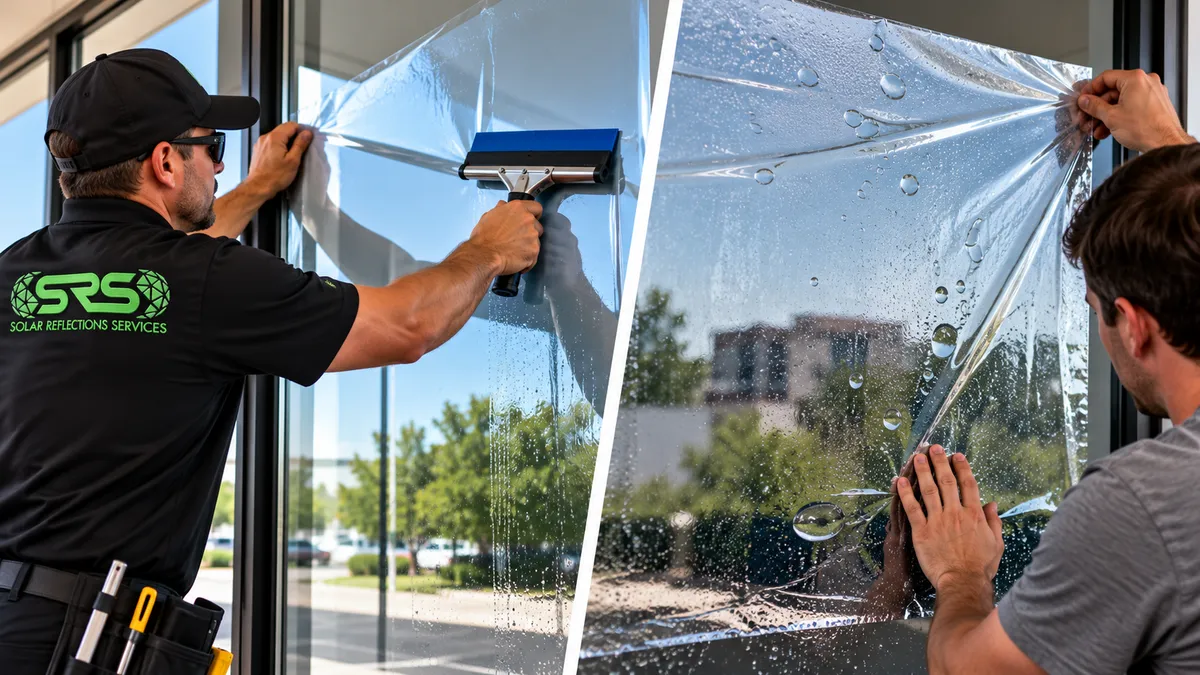
How Protective Films Keep Glass Intact After Impact
Standard glass breaks when strong hits or heavy impacts push it beyond its limits. Without protection, the force of an impact instantly shatters the pane into dangerous, fast-flying shards.
Shattered glass introduces immediate safety risks, security exposure, and costly operational downtime. Standard tempered or annealed glass offers no resistance once fractured, leaving buildings exposed to forced entry, severe weather, and personal injury liabilities.
Protective window film (also called security film) alters glass breakage behavior by absorbing and redistributing impact forces. By securing shattered fragments within a flexible structural matrix, protective film prevents flying debris hazards and delays forced entry by keeping the surface area relatively intact.
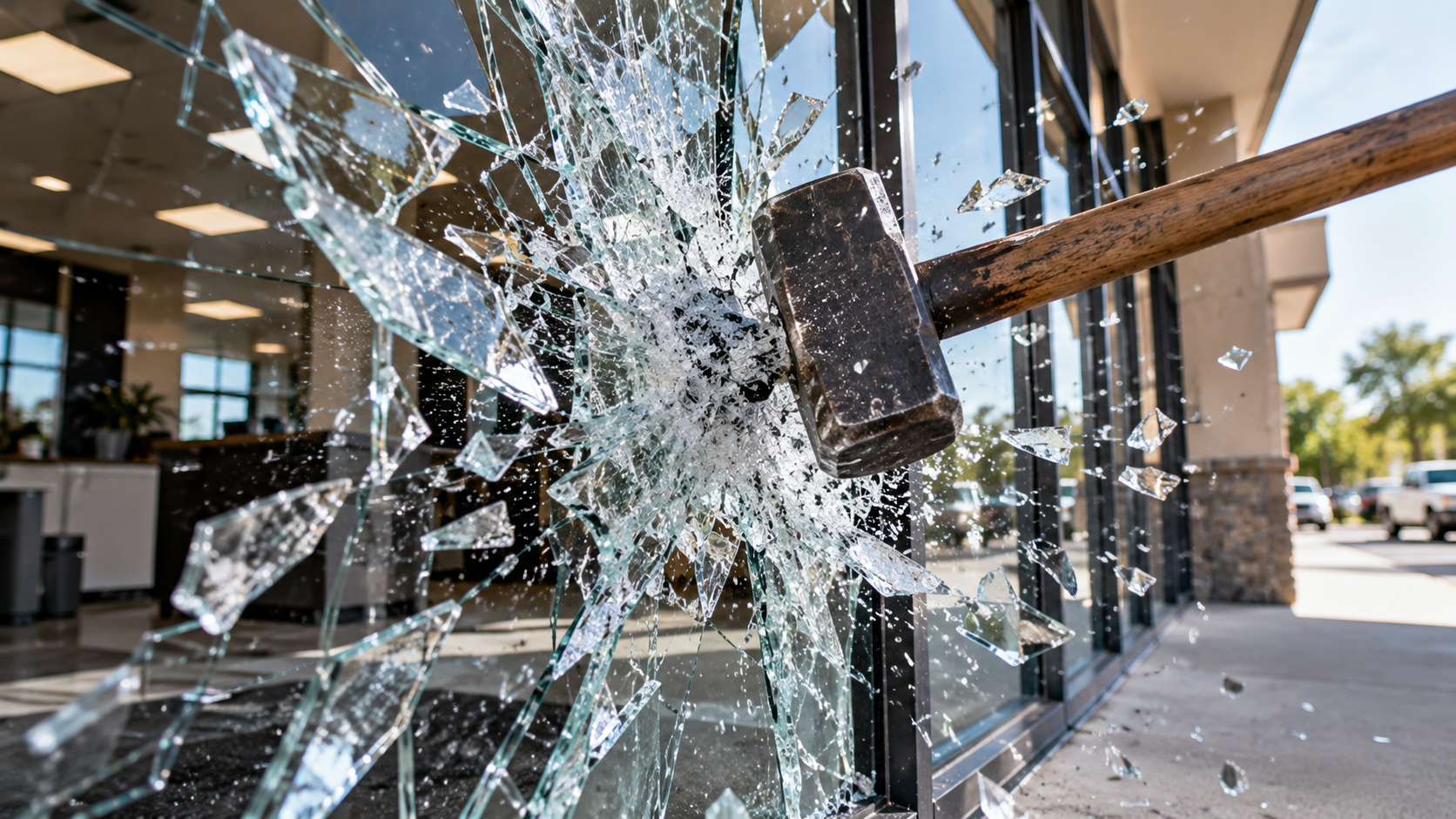
What Happens to Unprotected Glass During a High-Impact Event?
Standard glass breaks easily because it lacks internal flexibility to absorb dynamic force. Understanding how unreinforced windows fail helps illustrate why added structural protection is necessary.
When an object strikes standard glass, the pane cannot absorb the transfer of kinetic energy. The point of impact absorbs the entire stress load, causing micro-fractures that spread instantly across the surface.
Without a binding mechanism to control energy distribution, the brittle material yields, projecting sharp glass shards inward at high speeds. These fragments create severe personal injury liabilities, damage internal inventory, and complicate cleanup.
Once the glass shatters, it grants immediate unauthorized access and exposes interior spaces to severe weather damage.
The Science Behind Protective Window Film Mechanics
Protective window film functions as an engineered shock absorber by utilizing multi-layered polyethylene terephthalate (PET) sheets bonded with pressure-sensitive adhesives to distribute dynamic impact energy across the full surface of the glass.
Security films feature multiple layers of optical-grade PET polymer resin laminated under pressure using cross-linking adhesives to form a high-tensile membrane.
An aggressive pressure-sensitive adhesive (PSA) anchors the film matrix to the interior glass surface. When impacted, the adhesive transfers kinetic energy across the polymer surface while the flexible PET layers stretch to absorb the shock wave.
When forces exceed glass strength, the adhesive maintains its structural bond, holding fractured pieces together within a continuous flexible matrix to keep the barrier intact inside the window opening.
Why Attachment Systems Determine True Impact Performance
An attachment system connects or anchors the window film directly to the outer window frame, rather than relying only on the glass surface itself. This extra framing anchor is crucial because it stops the entire shattered glass pane from popping out of the frame during high-impact events.
Applying film to the glass pane retains fragments, but unanchored edges can allow the entire intact pane to pop out of the frame under dynamic pressure loads.
Standard installations leave a 1/16-inch perimeter gap for water extraction, which leaves the edge unsupported. High wind pressure or physical force can shear the glass along this frame line.
High-security installations utilize attachment systems to lock the membrane to the frame profile. Wet-glaze systems employ high-strength structural silicone sealant, while mechanical attachment systems use aluminum clamping profiles to physically fasten the film to the frame.
What This Means in Simple Terms
Think of protective film like strong tape on a glass window. If you only stick the tape onto the glass itself, a heavy blow might crack the glass and knock the entire sheet right out of the frame. An attachment system secures that tape directly to the metal or wooden frame around the window. That way, even if the glass shatters completely, the whole window stays safely anchored in place, keeping weather and intruders out.
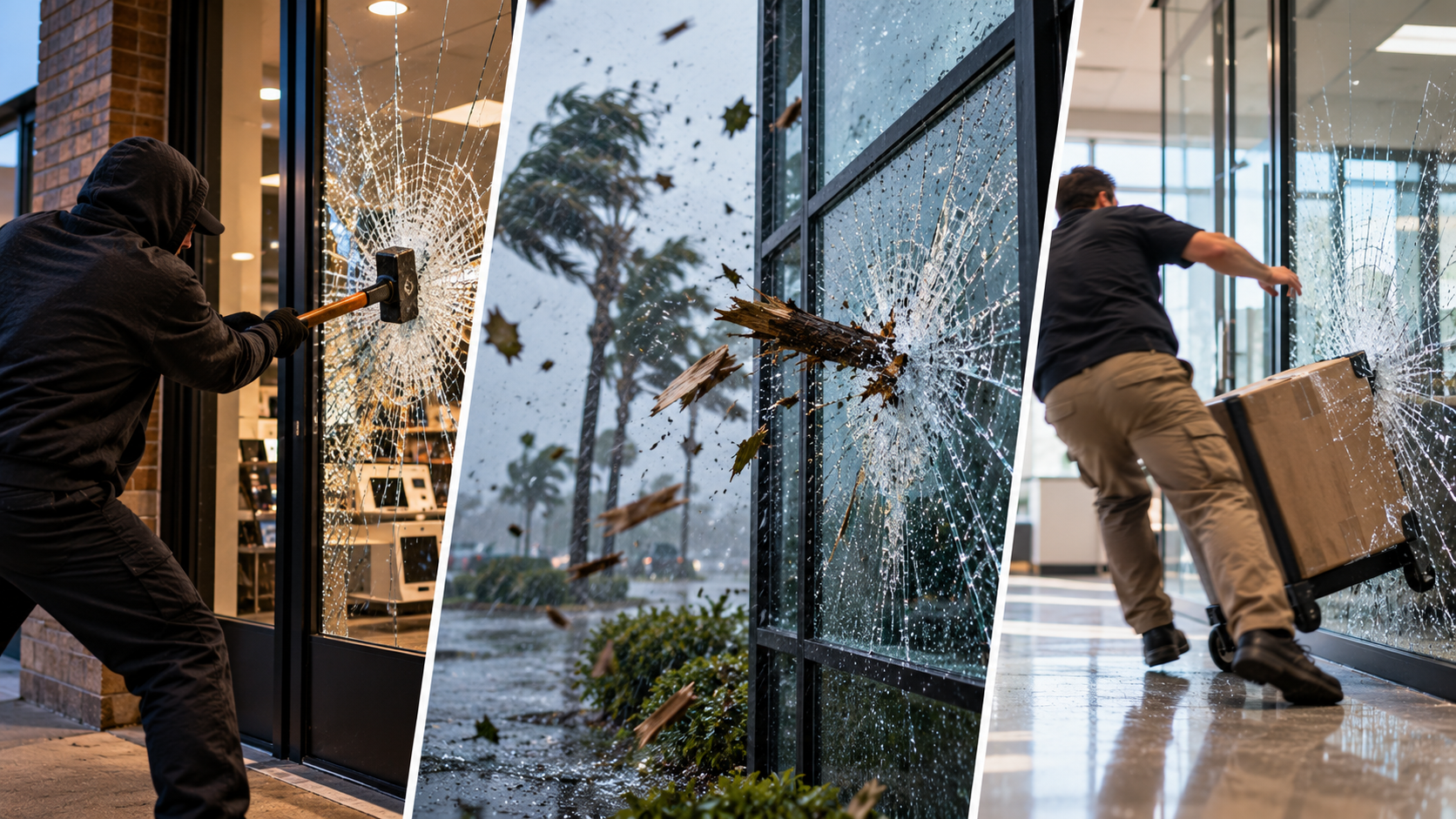
Real-World Scenarios: Where Impact Resistance Protects Operations
Security window film mitigates operational risk across commercial properties by reinforcing vulnerable access points against forced entry, severe weather projectiles, and accidental workplace collisions.
Integrating protective film creates a physical defense layer for your glass, reducing liabilities associated with burglary, storm damage, and personal injury.
Forced Entry and Theft Deterrence
Opportunistic smash-and-grab burglaries rely entirely on speed and silence. Standard storefront glass breaks in less than two seconds with a single blow from a hammer or brick, giving an intruder immediate entry. When an intruder hits glass reinforced with security film, the glass cracks but holds together within the frame.
Instead of stepping through an open hole, the criminal faces a flexible, sagging sheet of shattered glass that requires repeated, noisy blows to penetrate. This delay transforms a two-second entry into a multi-minute struggle, generating substantial noise that triggers alarm sensors and alerts passersby. Studies show that most burglars abandon forced entry attempts if they cannot gain access within a short window, forcing them to leave before breaching your inventory.
Severe Weather and Flying Debris
During severe storms, high winds turn loose yard debris, gravel, and branches into dangerous airborne projectiles. When a projectile breaches standard window glass, the sudden loss of structural integrity opens your building envelope to extreme windbursts and water intrusion. Rainwater flooding damages equipment, ruins flooring, and destroys valuable office assets in minutes.
Security window film acts as an exterior weather seal during severe storms. Even if a wind-driven object cracks the outer glass surface, the heavy PET polymer matrix prevents the pane from blowing inward. By holding the shattered glass intact, the film prevents internal pressurization and stops wind and water from damaging your interior operational space.
Accidental Collisions and Workplace Safety
Commercial environments feature heavy foot traffic, interior glass partitions, and low-level display windows where accidental impacts frequently occur. Slip-and-fall accidents, stray equipment, or heavy objects striking unreinforced glass can shatter the pane into razor-sharp shards. These flying or falling glass fragments present immediate liability risks and can cause severe injuries to employees and customers.
Applying safety and security film turns standard glass into compliant safety glazing. In the event of an accidental collision, the pressure-sensitive adhesive contains all fractured glass fragments within the film layer. This prevents dangerous shards from showering onto your sales floor or office workspace, minimizing personal injury claims and keeping your business compliant with workplace safety standards.
Debunking Safety Film Myths: What Protective Films Can and Cannot Do
You may have often encountered exaggerated claims when researching protective window films. Widespread misconceptions about "unbreakable glass" lead to unrealistic expectations and improper security planning. Understanding the actual physical limits of safety film helps commercial operators select the right level of protection for their facilities.
Myth 1: "Security Film Makes Glass Completely Bulletproof"
Standard security window films (ranging from 4 to 14 mil in thickness) are designed for impact resistance and fragment retention, not complete ballistics protection. While heavy-duty security films slow down projectiles and absorb energy, they cannot stop high-velocity bullets on their own. Bullet-resistant glazing requires thick, multi-layered ballistic glass or specialized polycarbonates paired with heavy structural framing.
Myth 2: "Protective Film Prevents Glass From Cracking"
Security film does not make glass flexible or immune to surface damage. When a heavy object strikes a filmed window with sufficient force, the glass pane will still fracture underneath the film. The film’s primary job is to hold the shattered pieces firmly together, maintaining the structural barrier and preventing flying glass hazards after the glass cracks.
Myth 3: "Standard Solar Tint Provides Impact Protection"
Thin solar control tints (typically 1.5 to 2 mil thick) are designed strictly for heat rejection, glare control, and UV protection. They lack the tensile strength, tear resistance, and heavy pressure-sensitive adhesives found in dedicated security films. Using a standard solar tint to reinforce glass against forced entry or storm debris will result in total structural failure during an impact.
Dual-Benefit Security: Combining Impact Resistance with Solar Rejection
Standard security window films focus entirely on shatter resistance, but modern ceramic hybrid security films deliver dual-layer protection. Building owners and fleet operators no longer have to choose between physical security and solar climate control. By integrating optical-grade ceramic nanoparticles into the multi-layer security matrix, advanced safety films reinforce glass while simultaneously controlling thermal radiation.
Heat and UV Protection Integration
Unprotected commercial glass allows massive amounts of solar energy and ultraviolet radiation to penetrate interior spaces. Standard glass windows absorb solar heat and transmit up to 70% of infrared radiation, causing cooling systems to work overtime and driving up energy costs. Modern ceramic security films block up to 99% of harmful UV rays and reject a massive portion of solar heat without darkening your interior space. This invisible thermal barrier keeps indoor temperatures stable, protects upholstery and product inventory from sun-fading, and significantly lowers monthly utility bills.
Preserving Natural Light and Storefront Aesthetics
Traditional physical security measures like metal bars, roll-down shutters, and security grilles disrupt building aesthetics and make retail storefronts look unwelcoming. Solid visual barriers signal danger to potential customers and block natural daylight, creating dark and unappealing commercial spaces. Clear or subtly tinted ceramic security film reinforces glass invisibly, allowing natural sunlight to fill the room while maintaining 24/7 view-through visibility for retail displays and office views.
Reducing Operational Costs
Investing in protective window film delivers immediate returns across both security and facilities operations. By mitigating shatter risks during break-in attempts or severe storms, security film prevents costly inventory damage and avoids expensive emergency board-up services. At the same time, the continuous heat rejection cuts HVAC strain during peak summer months, lowering total operational costs and protecting your bottom line.
Choosing and Installing the Right Security Film System
Selecting the correct security window film requires evaluating your property’s specific threat profile, architectural layout, and performance goals. Security films range from lightweight 4 mil safety membranes to heavy-duty 14+ mil multi-ply security systems. Matching the film specification to your operational needs ensures optimal protection without overspending on unnecessary material weight.
Evaluating Film Thickness
Film thickness directly correlates with tear resistance and impact absorption capacity:
4 Mil Security Film: Ideal for basic shatter safety, code compliance, and accidental impact protection in homes or low-risk commercial spaces.
8 Mil Security Film: The commercial standard for forced entry deterrence, burglary mitigation, and severe weather reinforcement.
12 to 14+ Mil Security Film: Engineered for high-risk commercial facilities, government buildings, and storefronts requiring maximum resistance against forced entry and blast mitigation.
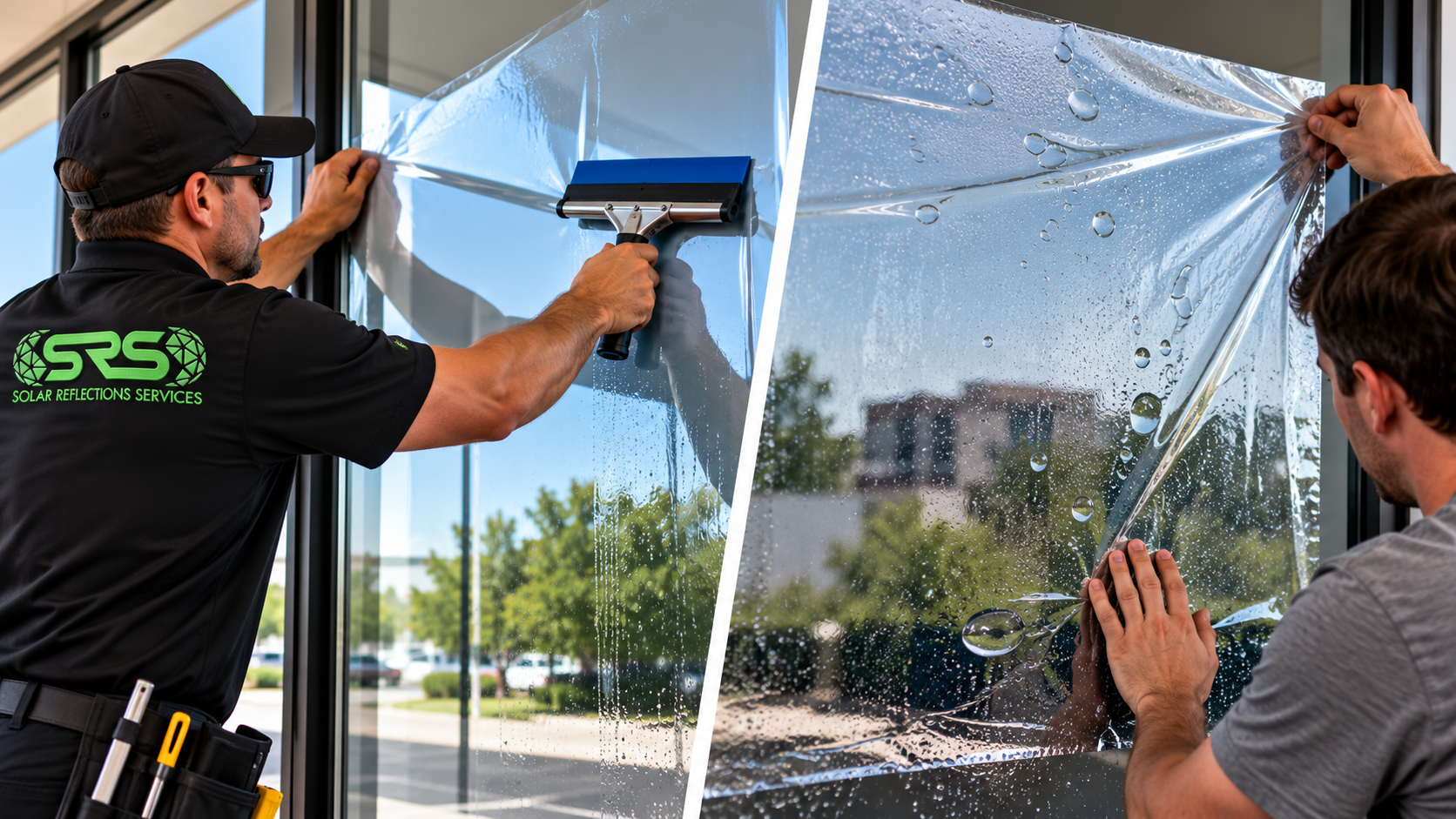
Professional Installation vs. DIY Risks
Attempting a DIY security film installation often compromises overall safety and protection. Installing heavy-grade security film requires specialized tools, thorough surface decontamination, and high-pressure squeegee techniques to properly extract water and fully activate the structural adhesive. Without professional tools and expertise, DIY attempts frequently trap moisture and leave air pockets, causing optical distortion and severely weakening the film's bond to the glass. During a real impact, an improperly installed film can easily fail or detach entirely. Professional technicians ensure the film and attachment systems are anchored correctly, guaranteeing the system performs as intended when protected spaces are tested by force.
The SRS Installation Guarantee
At Solar Reflections Services (SRS), we back every installation with 37+ years of industry experience. With our nationwide lifetime warranty support, you can trust your security film system to protect your building, employees, and inventory when an unexpected impact occurs.
Frequently Asked Questions
Does security window film prevent glass from cracking upon impact?
Security window film does not stop glass from cracking under heavy physical impact. Instead, the heavy-duty pressure-sensitive adhesive holds fractured glass fragments firmly inside the polymer matrix. This containment prevents sharp glass shards from flying inward and maintains a continuous physical barrier across your window opening.
How long does security window film delay a forced entry attempt?
Security window film delays forced entry by several minutes depending on film thickness, glass type, and the attachment system used. An intruder who expects standard glass to shatter in seconds faces a resilient, flexible membrane that withstands repeated, noisy strikes. This unexpected delay frequently causes burglars to abandon the break-in before breaching the property.
What is the difference between wet-glaze attachment and standard film installation?
A standard window film installation leaves a small perimeter gap near the frame edge to allow for water evacuation during application. A wet-glaze attachment system uses a high-strength structural silicone sealant to anchor the film edge directly to the window frame. Anchoring the film prevents the entire intact pane of shattered glass from being pushed out of the frame during severe impacts or storms.
Will security window film make commercial glass completely bulletproof?
Security window film does not make standard glass bulletproof. While heavy multi-ply security films absorb substantial impact energy and retain flying fragments, stopping high-velocity ballistic rounds requires multi-layered bullet-resistant glass assemblies paired with heavy structural framing. Security films are designed for forced entry deterrence, severe weather protection, and accidental impact safety.
Protect Your Glass and Secure Your Operations
Protecting your physical property begins at your window glass, the most vulnerable point of entry. Unreinforced glass shatters instantly under severe impact, causing injury hazards, security risks, and costly operational downtime. Installing engineered security window film transforms brittle glass into a resilient, shock-absorbing barrier that holds fragments firmly in place, deters intruders, and keeps your building envelope intact. Security film is one of the most cost-effective investments you can make to protect physical assets and reduce utility costs.
To evaluate your facility and determine the right security film system for your property, Schedule a Commercial Security Window Film Consultation.