
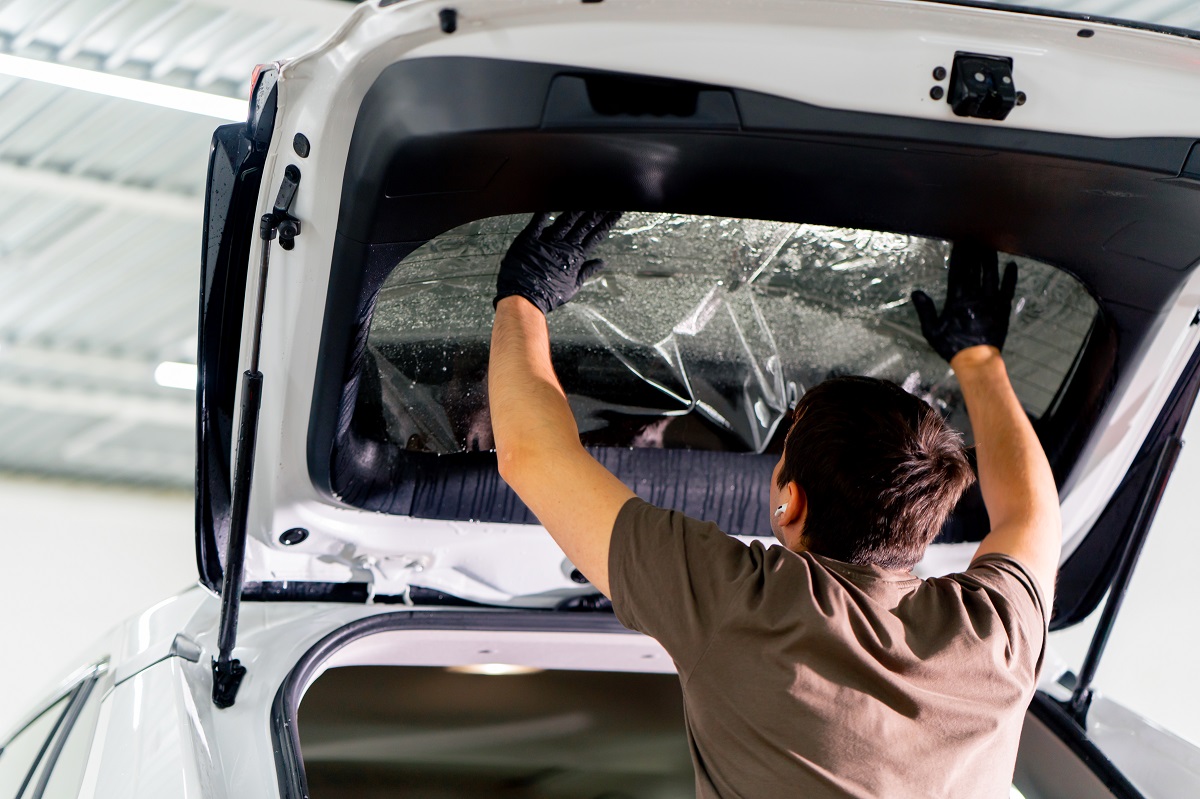
DIY vs. Professional Window Tint Maintenance: How to Protect Your Investment
Should you care for your window tint yourself, or rely on professional maintenance and inspections? Proper upkeep preserves optical clarity, heat rejection, and film lifespan across automotive, residential, and commercial applications. This guide breaks down the pros, cons, and hidden costs of DIY versus professional tint care so you know how to prevent peeling, bubbling, and fading.
1. The Science Behind Tint: Why Maintenance Matters
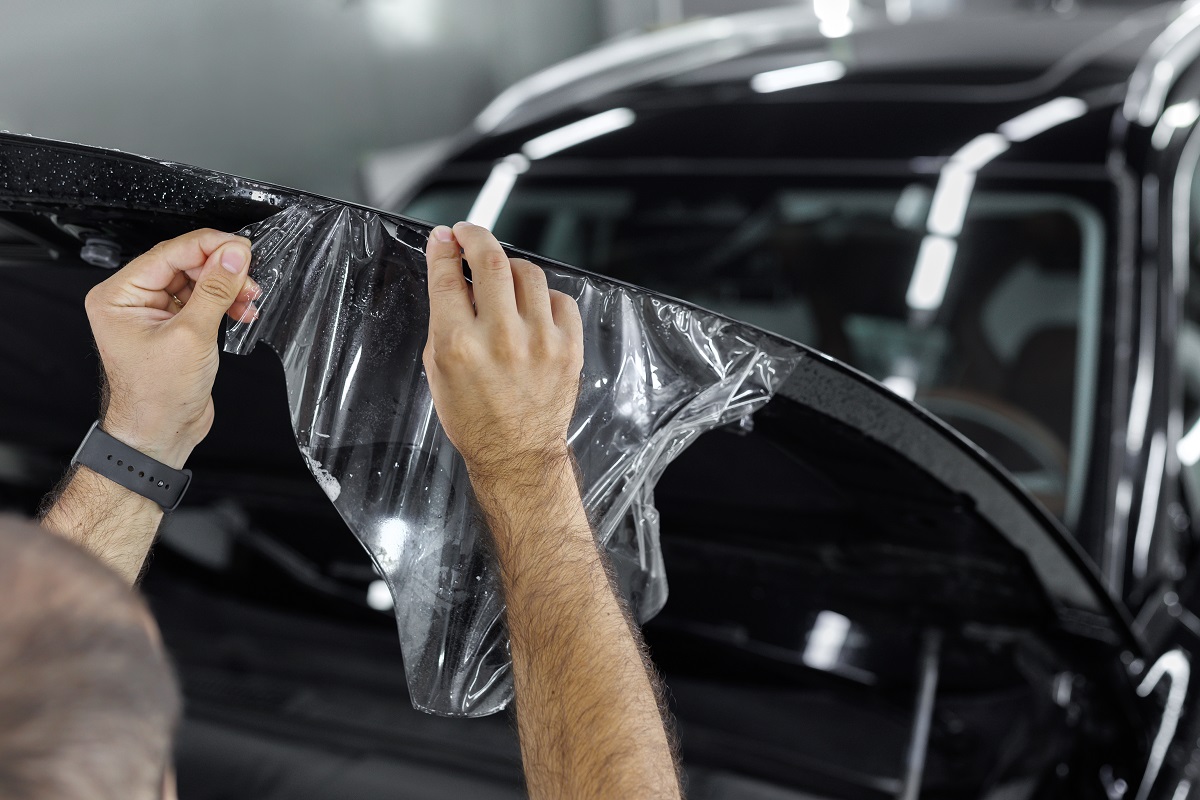
Window tint maintenance prevents premature film degradation, bubbling, edge peeling, and chemical discoloration caused by UV radiation, environmental debris, and harsh cleaners. Multi-layer ceramic films rely on an intact topcoat and adhesive layer to continuously reject solar heat and block 99% of UV rays. Proper upkeep protects both the aesthetic appearance of your glass and your long-term investment in window protection.
Window tint may look like a thin layer of dark plastic, but modern films—especially multi-layer ceramic and nano-ceramic films—are engineered solar shields. They work continuously to protect your vehicle cabin, living room, or commercial building from sun damage.
Solar radiation, road grime, environmental debris, daily fingerprints, and chemical cleaners subject window film to constant stress. Without correct upkeep, high-performance tint can prematurely bubble, peel at the edges, develop a hazy film, or undergo chemical discoloration.
How Tint Protects Your Vehicle & Property:
Blocks up to 99% of Harmful UV Rays: Prevents leather seats, dashboards, flooring, and upholstery from cracking and fading.
Rejects Solar Heat: Cuts interior infrared heat, reducing air conditioning load and fuel consumption.
Slashes Blinding Glare: Improves driving visibility and prevents eyes strain during peak sunlight hours.
Enhances Safety & Shatter Resistance: Holds broken glass fragments together during unexpected impacts or glass breakage events.
To maintain these protective capabilities over time, you must protect the chemical adhesive layer and scratch-resistant top coat from improper physical handling and harsh cleaning agents.
2. Tint Care Basics Every Owner Should Know
Essential window tint maintenance requires respecting the initial curing period, using only ammonia-free glass cleaners, and avoiding abrasive tools like paper towels or scrapers. Following these baseline rules protects the film's chemical adhesive bond and scratch-resistant top coat from physical or chemical destruction. Preventing improper handling from day one ensures maximum heat rejection and optical clarity over the life of the film.
Regardless of whether you choose DIY cleaning or professional inspections, every owner must follow a few non-negotiable window tint maintenance rules:
Rule #1: Respect the Curing Window
After a fresh tint installation, the film requires time to dry and cure completely. Water moisture trapped beneath the film evaporates through tiny microscopic pores in the material.
Curing Timeframe: Allow 3 to 5 days in hot, sunny conditions, or up to 2 to 3 weeks in colder or humid weather.
Prohibited Action: Do not roll down tinted windows or clean the interior glass during this window. Rolling windows down early can snag uncured film edges and tear the film away from the glass.
Rule #2: Eliminate Ammonia Completely
Ammonia is the single biggest enemy of window tint. Popular household glass sprays containing ammonia break down the protective top layer of polyester film and dissolve the underlying adhesive over time.
The Damage: Ammonia exposure turns dark window film into a hazy, purplish, bubbly eyesore that loses heat rejection power.
The Solution: Always verify that glass cleaners are labeled explicitly as Ammonia-Free, or use a mixture of distilled water and a tiny drop of mild dish soap.
Rule #3: Never Use Abrasive Tools
Scouring pads, steel wool, rigid plastic scrapers, and rough paper towels will scratch the protective hard-coat on tinted glass. Once scratched, light reflects through the film unevenly, causing permanent glare lines.
Safe Cleaning Tools: Use only clean, ultra-soft microfiber cloths or professional non-abrasive rubber squeegees.
3. DIY Tint Maintenance: Pros, Cons, and Common Pitfalls
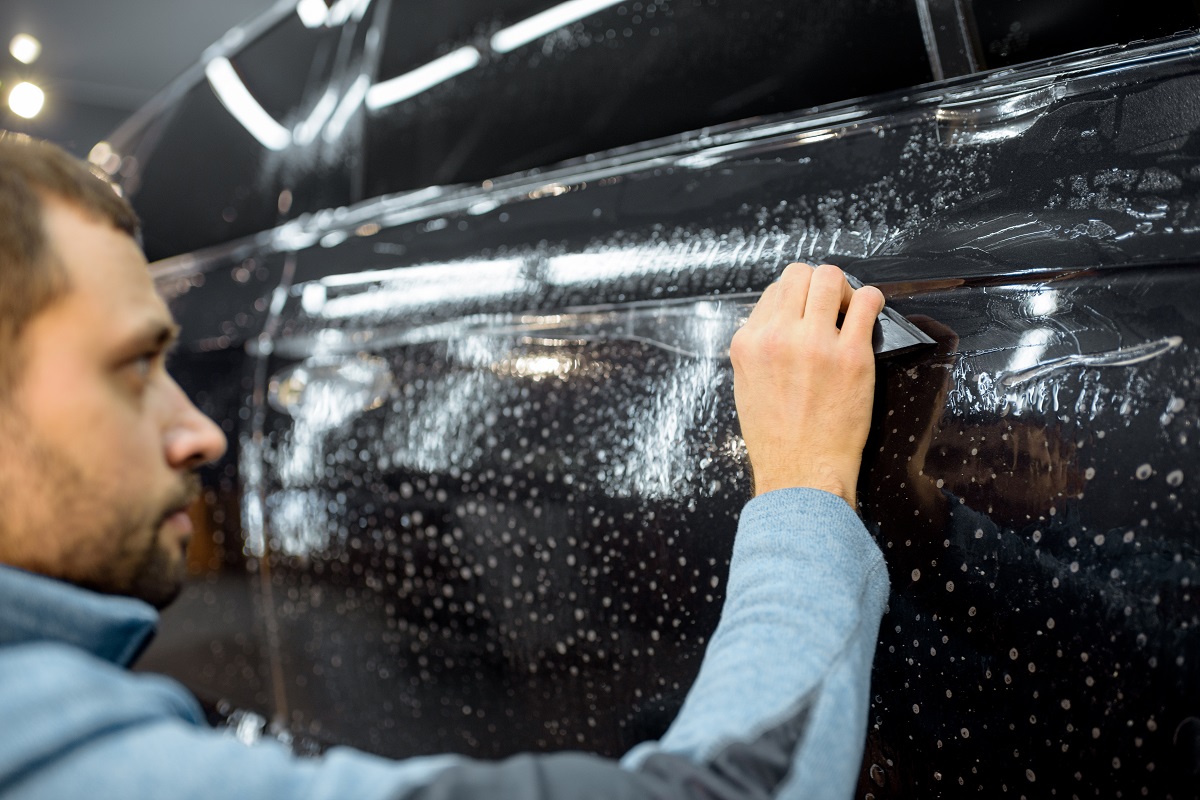
DIY window tint maintenance offers a low-cost, convenient way to perform routine surface cleaning and quickly remove fresh contaminants like bird droppings or tree sap. However, DIY care carries high operational risks, including accidental film scratching, adhesive degradation from improper household cleaners, and damaged heat seals. It is best suited for basic dust removal rather than structural film repairs or deep edge cleaning.
The Advantages of DIY Maintenance
Cost-Effective Surface Care: Regular DIY wipe-downs require only a simple $5 microfiber towel and an ammonia-free cleaner.
Immediate Attention: You can quickly clean off fresh tree sap, bird droppings, or sticky residue before it bakes into the outer surface under intense sunlight.
The Risks and Limitations of DIY
While wiping away dust at home is simple, DIY care carries real operational risks when owners perform improper deep cleaning or attempt scratch repairs:
Common DIY Mistake | Real-World Damage Caused |
Ammonia-Based Glass Sprays | Chemically strips film layer & turns tint purple. |
Abrasive Paper Towels | Leaves permanent micro-scratches across the viewable area. |
Razor Blades on Bubbles | Punctures solar film, ruptures adhesive, & ruins heat seal. |
Neglecting Edges | Traps grit in window seals, causing peeling when rolled down. |
Can you clean tinted windows with household glass cleaner?
No. Standard household glass cleaners (such as traditional Windex) often contain ammonia, which chemically breaks down window film adhesives and causes fading, cloudiness, and peeling. Always use an ammonia-free cleaner formulated specifically for automotive tint or a blend of distilled water and mild dish soap applied with a soft microfiber towel.
4. Is Professional Tint Maintenance Worth It?
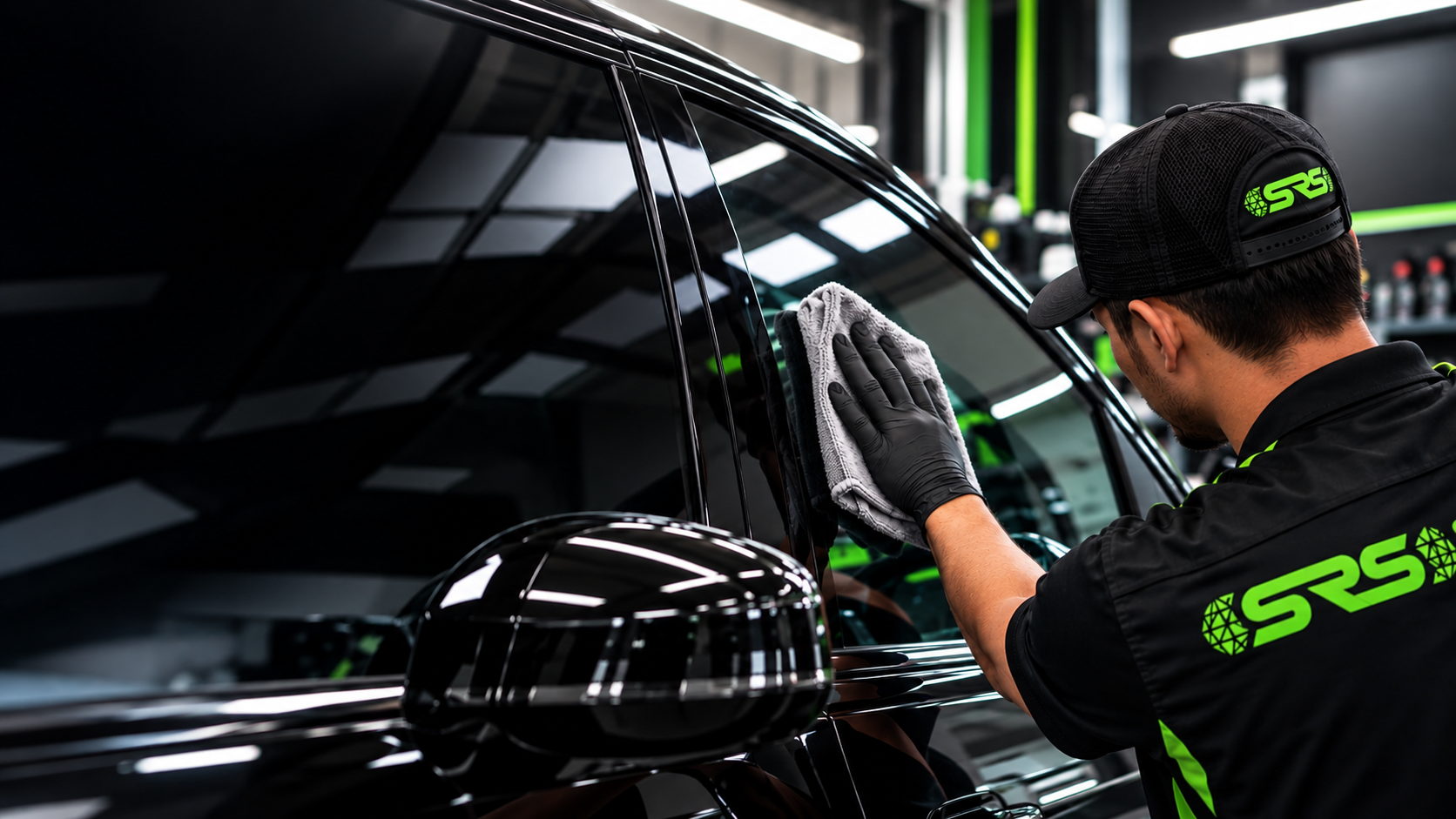
Professional tint maintenance is worth the investment because it includes comprehensive edge-seal inspections, deep non-abrasive surface restoration, legal VLT light-meter testing, and warranty validation. Certified technicians identify early edge lifting before full peeling occurs, protecting both your vehicle's resale value and film coverage. While routine wiping can be done at home, professional servicing ensures maximum long-term durability and solar performance.
While daily dust removal can be done at home, professional tint maintenance involves comprehensive inspection, deep cleaning, edge-seal validation, and warranty protection.
What Professional Tint Maintenance Delivers
Edge Adhesion & Seal Inspections: Technicians inspect top edge bevels and door gasket seals where dirt and moisture enter, preventing film lift before it turns into full-blown peeling.
Safe Surface Restoration: Professionals use specialized non-abrasive cleaners and precise squeegee techniques to lift embedded oils, smoke haze, and water spots without scratching the topcoat.
Legal VLT Compliance Testing: Using calibrated light meters, professional shops check that your vehicle's Visible Light Transmission (VLT) matches local and state tint laws, helping you avoid tint violation tickets.
Preservation of Lifetime Warranties: Improper DIY chemical use can invalidate film warranties. Professional servicing maintains warranty documentation, protecting your coverage for color stability and adhesive bond.
5. DIY vs. Professional Maintenance: Direct Comparison Matrix
Use this quick-decision matrix to evaluate your upkeep strategy based on cost, risk, tool requirements, and warranty impact:
Feature / Dimension | DIY Tint Maintenance | Professional Tint Maintenance (SRS) |
Primary Focus | Routine surface cleaning & dust removal | Deep seal inspection, optical clarity check & edge adhesion |
Recommended Tools | Microfiber towels & ammonia-free spray | Professional-grade non-abrasive cleaners & edge squeegees |
Risk of Film Damage | High (accidental peeling, razor scratches, chemical haze) | Zero risk (backed by Iron-Clad Installation Guarantee) |
VLT Legal Checks | Visual estimation only | Calibrated light-meter testing for state compliance |
Warranty Protection | Improper chemical use can void manufacturer warranties | Keeps Nationwide Lifetime Warranty coverage fully intact |
Overall Value | Low upfront cost; higher risk of costly replacement | Preserves film lifespan, vehicle resale value, and heat rejection |
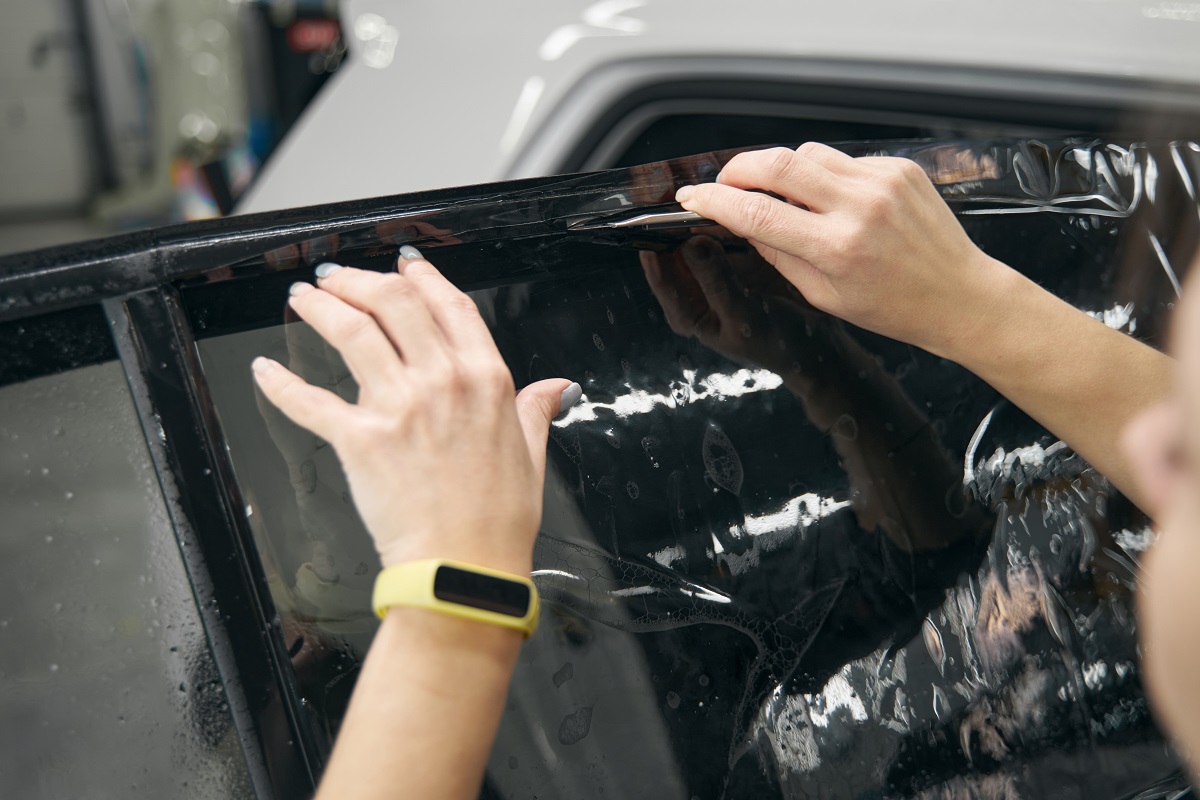
6. Common Tint Myths & Costly Mistakes
Common tint myths—such as popping film bubbles with razors or assuming darker shades always reject more heat—lead to expensive mistakes and ruined glass. Heat rejection depends primarily on film technology, like nano-ceramic layers, rather than darkness percentage alone. Avoiding improper DIY fixes preserves the protective particle coatings and keeps your installation warranty intact.
Myth 1: "If my tint develops bubbles, I can just pop them with a pin or razor."
The Reality: Bubbles caused by trapped water during installation will evaporate during curing. However, bubbles that form years later are caused by adhesive breakdown. Puncturing the film tears the material, introduces dirt, and leaves permanent air pockets that require complete film replacement.
Myth 2: "All ceramic window tints perform the same without special care."
The Reality: Premium ceramic films (such as 3M, Huper Optik, and Autobahn) feature multi-layer ceramic particle coats. While highly scratch-resistant, harsh solvents and abrasive wiping will degrade their surface integrity, reducing heat rejection performance over time.
Myth 3: "Darker window tint always provides higher heat rejection."
The Reality: Tint darkness (VLT percentage) limits visible light, but solar heat rejection depends on the film's technology. High-end nano-ceramic and infrared-blocking films block heat effectively even in light or near-clear shades. Proper care ensures these microscopic ceramic layers continue reflecting solar radiation efficiently.
7. Recommended Tint Care Timeline
A proper window tint care schedule consists of a 3- to 14-day initial curing phase with zero contact, followed by monthly routine DIY cleaning with ammonia-free products and microfiber towels. Additionally, scheduling annual professional inspections allows installers to evaluate edge adhesion and weatherstripping seals. Following this structured timeline maximizes film clarity and prevents premature failure.
Follow this quick schedule to keep your residential, commercial, or auto window tint performing at its peak:
First 3–14 Days (Post-Installation): Curing Phase. Leave windows up. Do not touch or clean interior glass. Ignore temporary water haziness or tiny moisture pockets.
Monthly: Routine DIY Cleaning. Gently clean interior glass surfaces using an ammonia-free glass cleaner and clean microfiber towels.
Bi-Annually / Annually: Professional Inspection. Have your tint installer check edge adhesion, inspect door weatherstripping for trapped debris, and test film clarity to catch minor edge lifts early.
8. Repair vs. Replace: When Is It Time for New Film?
Window tint requires full replacement when it exhibits purple chemical discoloration, widespread blistering or "waffle" bubbling, deep gouges, or severe optical distortion that impairs driving safety. Minor surface dirt or initial water pockets require only cleaning or normal curing, while localized edge lifting can often be professionally repaired. Replacing severely degraded film restores heat protection, cabin comfort, and visual safety.
Not all film defects can be cleaned or repaired. Knowing when to replace your film saves time and protects your vehicle's interior:
Clean or Keep: Minor exterior water spots, light dust buildup, or initial installation moisture pockets (which clear naturally during curing).
Requires Professional Repair: Early edge lifting along top door seals or minor bubbling caught before adhesive detachment spreads.
Requires Full Replacement: Purple discoloration (chemical oxidation), extensive blistering/bubbled "waffle" patterns, deep surface gouges, or optical distortion that impairs driving safety.
Protect Your Investment with Solar Reflective Services
Your window tint is an investment in your vehicle's appearance, interior comfort, and solar protection. While regular DIY cleaning with microfiber cloths and ammonia-free products keeps your glass clear, catching early edge-lifting or adhesion breakdown requires an expert eye.
Don't let peeling, purple fading, or bubbling ruin your ride's aesthetic or diminish its resale value.
With over 37 years of industry experience, Solar Reflective Services (SRS) brings professional craftsmanship to Pelham, Alabama, and the surrounding Southeast region. Recognized as Huper Optik USA’s Southeast Dealer of the Year for three consecutive years, SRS pairs certified installations from top industry vendors—including 3M, Autobahn, Avery Dennison, and Huper Optik—with an Iron-Clad Installation Guarantee.
Every vehicle tint service at SRS is backed by a Nationwide Lifetime Warranty, giving you absolute confidence on every mile.
Need Your Window Tint Inspected or Upgraded?
Whether you're noticing early film bubbling, need an ammonia-damaged tint removed, or want to upgrade your vehicle or building with high-performance ceramic film, schedule an inspection: Book Your Consultation Online